Sorry... Cosmix was built as a web design demo site.
You can view the Home page, Blog Page, and/or read blog posts.
The About, Contact, and Learn More links are just filler content.

Sorry... Cosmix was built as a web design demo site.
You can view the Home page, Blog Page, and/or read blog posts.
The About, Contact, and Learn More links are just filler content.



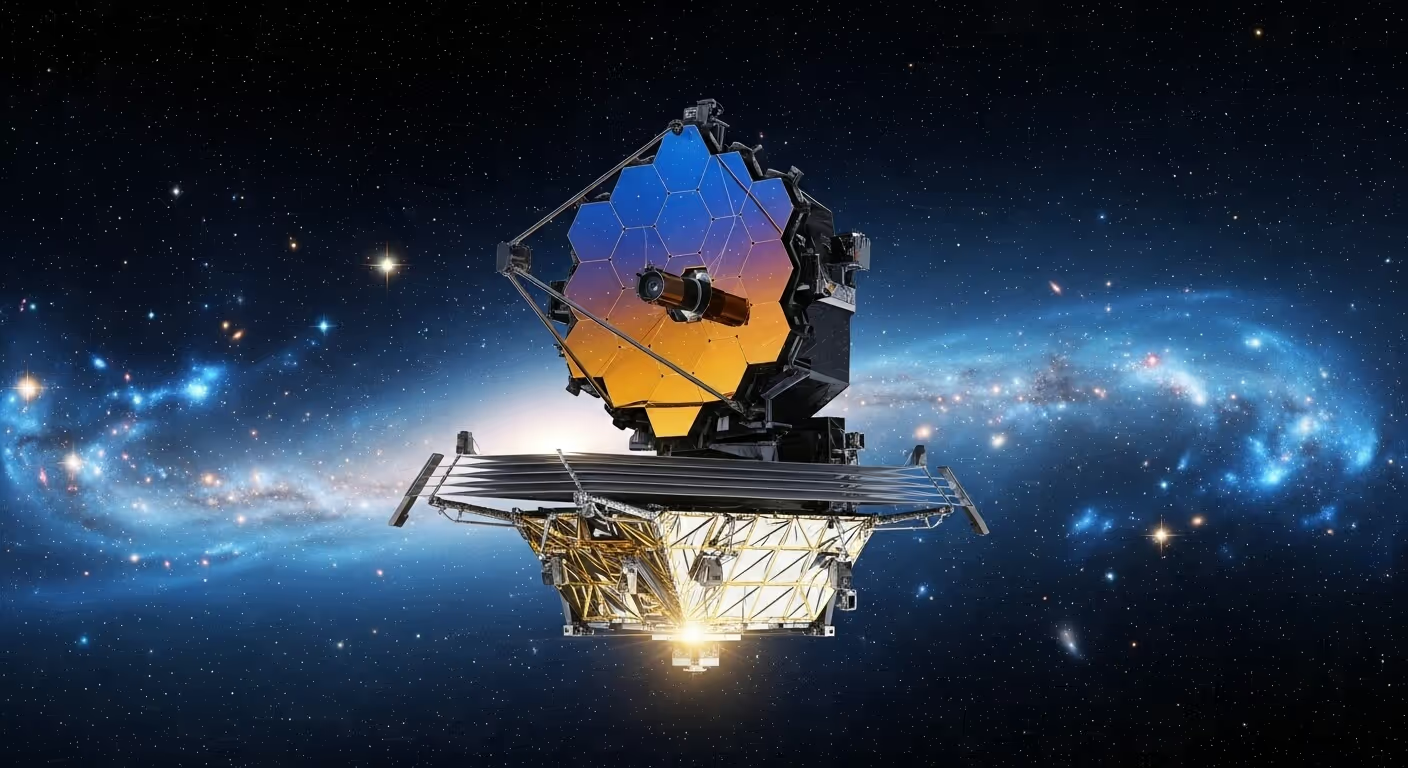
The James Webb Space Telescope (JWST) is an infrared space telescope designed to see farther into the universe than ever before.
It's the largest and most powerful space telescope built, equipped with a huge primary mirror and a tennis-court-sized sunshield to keep it cold.
Webb was launched on December 25, 2021, and its mission is to study every phase of cosmic history, from the first galaxies to the formation of solar systems.
The universe is expanding, and this expansion stretches the light from distant objects, shifting it into longer, redder wavelengths. This is called redshift. Because of this, the light from the first stars and galaxies is now in the infrared spectrum, which is invisible to the human eye.
The Hubble Space Telescope, which primarily observes in visible light, couldn't see these faint, ancient objects. Webb's instruments are specifically designed to detect this infrared light, allowing it to peer back in time and capture images of the universe's earliest moments, just a few hundred million years after the Big Bang.
Infrared light can also penetrate the thick, dusty gas clouds where stars and planets are born. This allows Webb to look into "stellar nurseries" that are opaque to visible-light telescopes, revealing the processes of star and planet formation in unprecedented detail.
In its short time in operation, Webb has already delivered groundbreaking discoveries that are reshaping our understanding of the cosmos:
The James Webb Space Telescope has truly opened a new era of discovery. Its ability to capture the faint infrared glow of the first stars and the chemical fingerprints of alien atmospheres is providing us with an entirely new perspective on the universe and our place within it.

